Coral Crab
- Behavior
- Neutral
- Scans to unlock
- 1×
Databank Entry
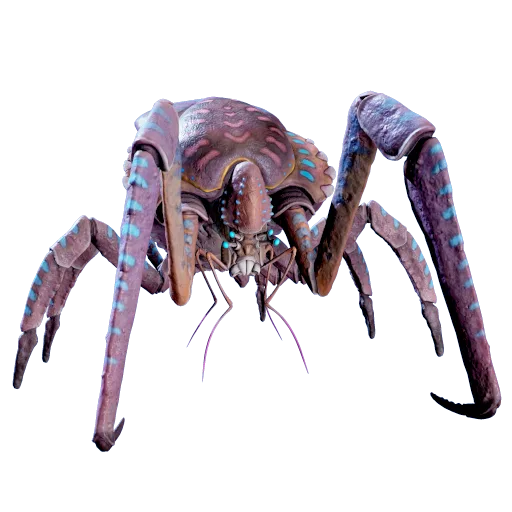
An enormous crab (tentatively Ostrakonskelos anaktoraphore, hard-legged palace-bearer) that hides among coral domes.
Crablike body plan
Forelimbs rake and dig for food which is collected by long soft maxillipeds (food handling limbs) around the mouth. The crab must molt to grow.
Coral dome
A living coral dome, cut from its holdfast and worn. It provides camouflage, protection, and perhaps a nursery for the crab’s young. Are they married to a single dome, or are domes traded as they grow?
Implicit predator
Defenses and behavior imply the existence of a predator powerful and dextrous enough to shuck the crab from its dome and crack its heavy armor.
Viral activity
Genome contains large repeated retroviral inserts, including nerve growth factors and shell pigments. Molecular clock suggests they were recent introductions. Cells on the crab’s back contain large segments of the coral dome polyp’s genome.
Large brains
The coral crab has no spinal nerve braid. A large brain above the eyes manages senses and behavior planning, while a secondary nerve cluster controls the legs and digestive system.
Seafloor communication
Coral crabs drum on the seafloor to signal to each other. Claw-clacking is likely a sign of intense excitement or agitation. Some Earth crabs seek desirable partners to pair with prior to molting, a behavior known as ‘handholding’. Finding a similar behavior on this world may be emotionally rewarding.
Signs of ecological stress
Mineral deficiencies and fungal infections imply environmental stressors. Assessment: likely fears you more than you fear it. Be cautious and respectful. At least as intelligent as a gorilla. Possibly a useful source of seabed resources.
Research proposal
determine whether the crab carries its dome to sunny or nutrient-rich areas for feeding.
Threat profile
- Alert duration
- 3s
- Vision cone
- 180°
Scanning unlocks
All biomods →
Encounter guide
- ›Actively hunts on sight.
- ›180° vision cone.
- ›Alert state lasts 3s.
Where to find
29–59 m SE 120° · 310 m from Lifepod