Periscopic Clowncrab
- Behavior
- Herbivore
Databank Entry
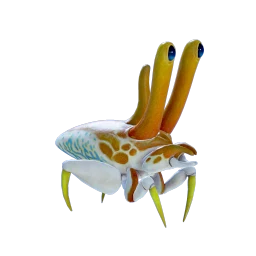
Ostrakonskelos periskopion, the hard-legged periscope. A social crab that shelters among stinging anemones.
Reduced body
The clowncrab's single-segment body is an illusion. The multiple segments of other Protean arthropods are still present, nested inside. When the clowncrab molts, it sheds its internal shells through its digestive tract.
Regenerative eyestalk
Enormous eyestalks mimic the surrounding anemones. If bitten off by a predator, each stalk is packed with unspecialized cells that quickly regenerate missing eyes. If the stalks grow too long, the clowncrab will trim them to avoid drawing attention.
Anemone tender
The clowncrab provides a valuable service to sessile anemones by ranging out to forage, returning nutrients in its molt and waste. It also grooms the anemones to clean parasites and infections.
Fecund stalk
The third stalk behind the eyes is a reproductive organ. The same unspecialized cells used to heal the eyestalks become eggs or sperm. Sperm is released into the seawater, while eggs are deposited among anemones.
Assessment
sign of a healthy anemone field.
Threat profile
- Detection range
- 7m
- Loses target
- 9m
- Alert duration
- 3s
Encounter guide
- ›May attack if you enter its personal space.
- ›Herbivore — only aggressive if cornered or provoked.
- ›Detects you within 7m.
- ›Retreat past 9m to break pursuit.
- ›Alert state lasts 3s.
Where to find
12–32 m S 174° · 170 m from Lifepod